Seriously mate some of the talk about core muscles is just nuts. Moving well or using my body is another area I could have used help with but got stupid advice instead.
To give a simple starting definition I consider the ‘core muscles’ for movement the ones that maintain and connect the area between the chest and hips.
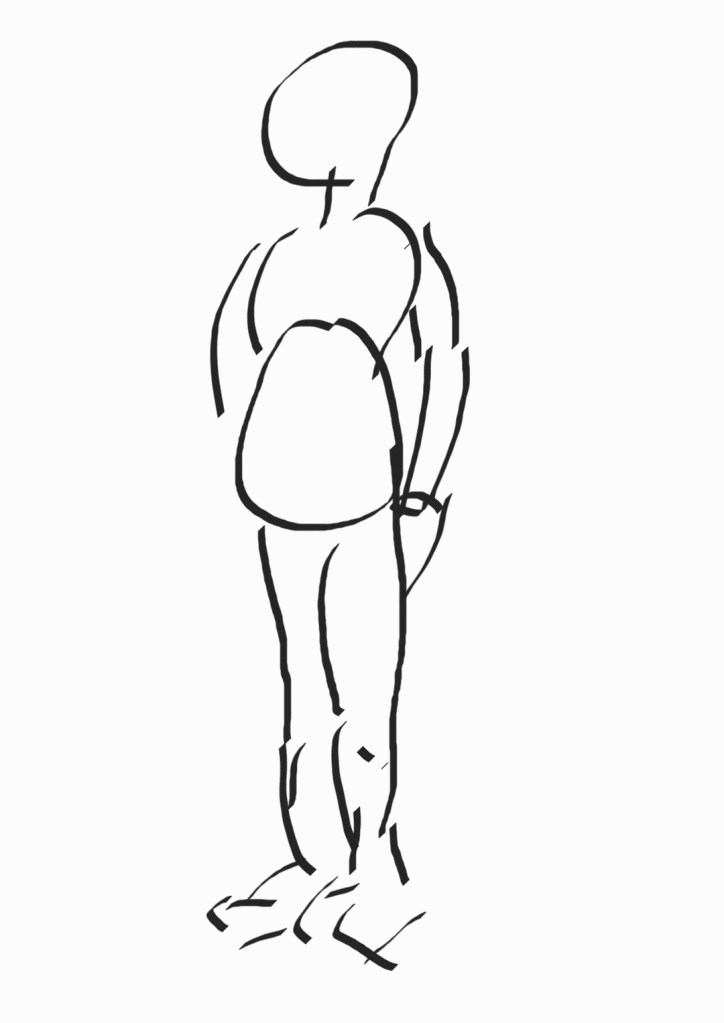
People spend lots of time on what the correct main feelings are for specific exercises are, but less commonly work out how to help people understand core function well. Till I figure out something better, I’m calling the concept the main lines of buoyancy.
Theses days I think lines of buoyancy in the body are like a bow shape. I fell if core muscles have normal levels of restriction and there are no issues affecting the nervous system it will be felt in two ways. For the front of the body with gentle forward pressure at the groin area and down on either side of the spine into the pelvis.
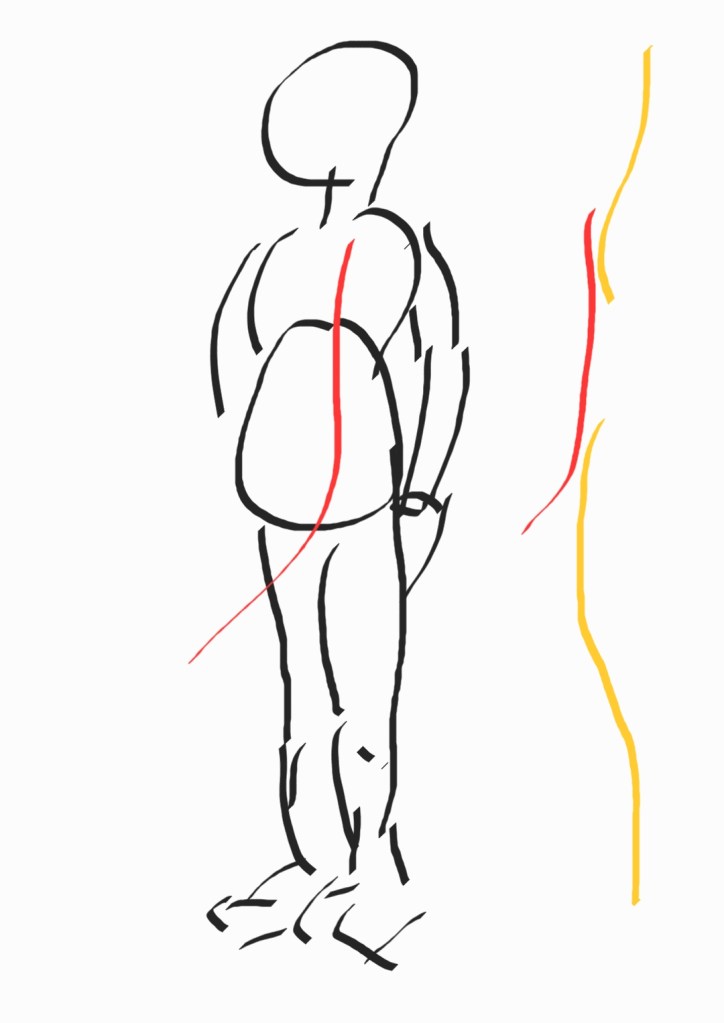
For efficiency, through bad habits, by ignorance or by looking to achieve specific results people will often train their core to operate in stable dysfunctional patterns. Lets compare what the industry theory I have come across seems to point at as the best posture to load your core.
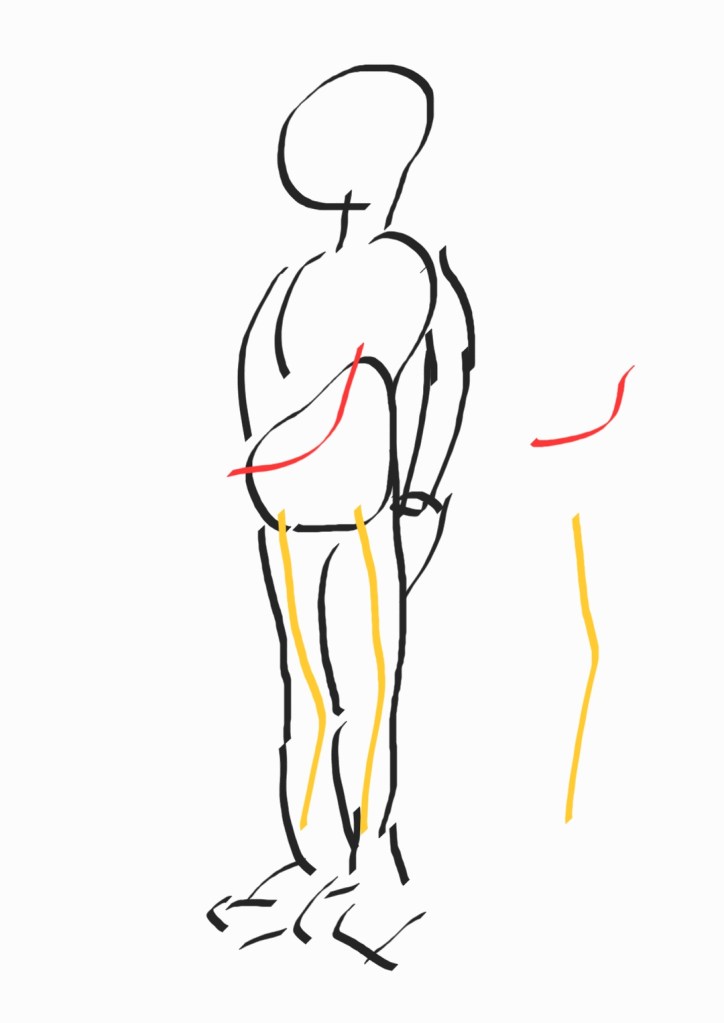
Let call this a pelvic biased core. This position is commonly taught as it can provide more strength, cause less postural feedback for badly designed environments and will tent to lead to back injuries from which people can be put back to work more easily from.
Teaching of this style will focus on tensing the core evenly. The postural adjustment will be most obvious when things like bench press or wall activities are taught. It will be suggested that the small of the back being suggested to to make contact with the surface instead of having a gap.
‘Buoyancy’ seems to be rarely tackled. When I went to learn more in this area it was suggested I needed to learn to use my pelvic floor. This posture has the hips rolled so that the rest of the core tenses behind it. I makes it easier to feel and tense the muscles under the pelvis. I didn’t find the cues helpful for making progress.
The other issue that the illustrated variant can lead too is knee issues from the hamstring shortening of the hip positioning.
In summary the aim of this posture seems to be loading on a evenly compressed core.
Next let’s look at a stable dysfunction that I’ve seen more in dancing.
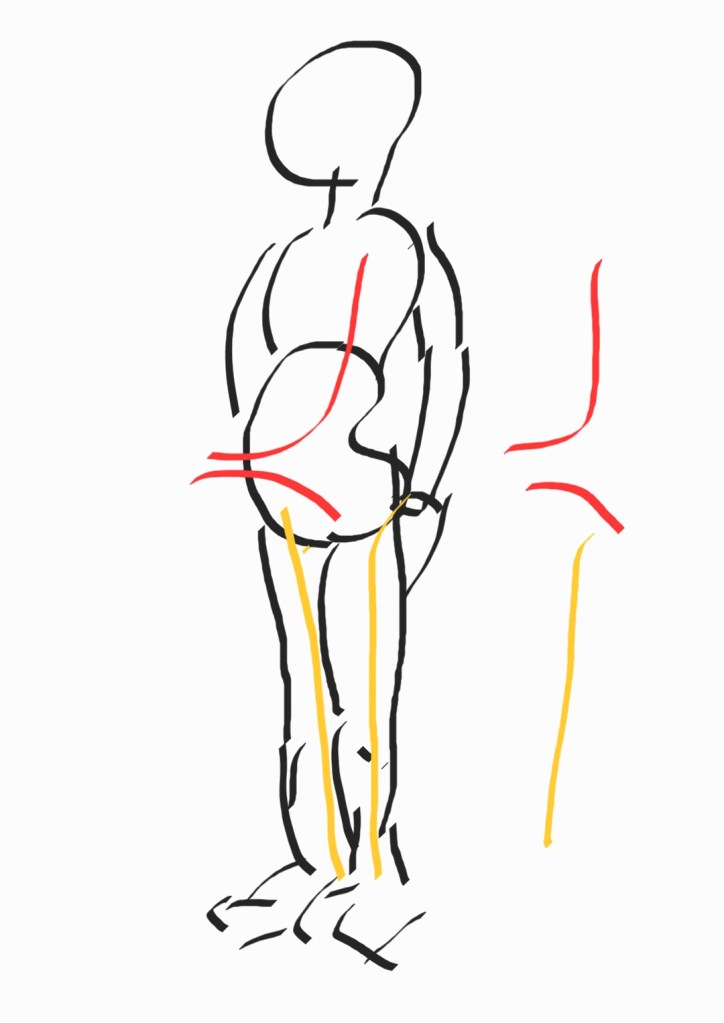
Let’s call this the limb biased core. This bias can quickly give more range of movement, add to the freedom of feeling and provide a shape that some people like more. Pressure often comes out nearer the belly button instead of the groin area.
This doesn’t seem to be overtly taught. I have only heard a few dance places telling people to imagine tucking their shoulder blades into the back pockets of their jeans. It is usually seems to start from expected movement patterns requiring more free swinging of the hips.
Buoyancy is something that is just asked for. Some places might cover part of it with walking well through your foot. Comments might be; imagine you are almost floating this time, to; it sounds like there’s a herd of rhinos stomping around here.
To simplify the downside of adjusting for flexibility is that the compromised position reduces the weight that can be handled without damage or pain occurring.
Next there is a posture that can literally keep you on your toes.
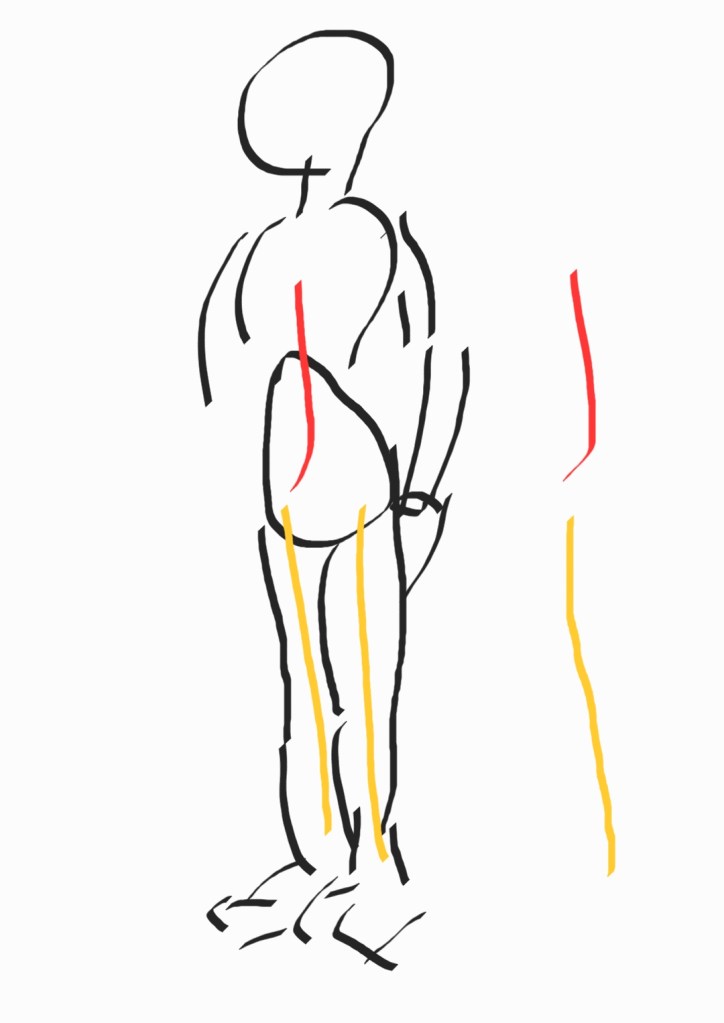
I think I’ll call this the forward biased core it is useful for people that alternate between sitting a lot and accelerating a lot. It’s not the worst posture to rely on as a courier or gymnast. The variant where the chin sticks forward is definitely not the best for fighting.
This posture can cause neck or shoulder issues depending on how the chest transfers force. This can also lead to the weakening of feet depending on how it is used.
The above doesn’t even begin to come close to being a full list of postures. Also the core can be varying between a rang of positions depending on how people are used to moving. This first bit was purely to start to focus on an idea for understanding the core with a common amount of restriction affecting it is loaded.
Why would I even bother thinking about how restricted a persons core is?
If you understand how buoyant of restricted someone’s core is, it will allow you to better help them analyse and cue it better. To often people are told to just tense there core and everything will be fine.
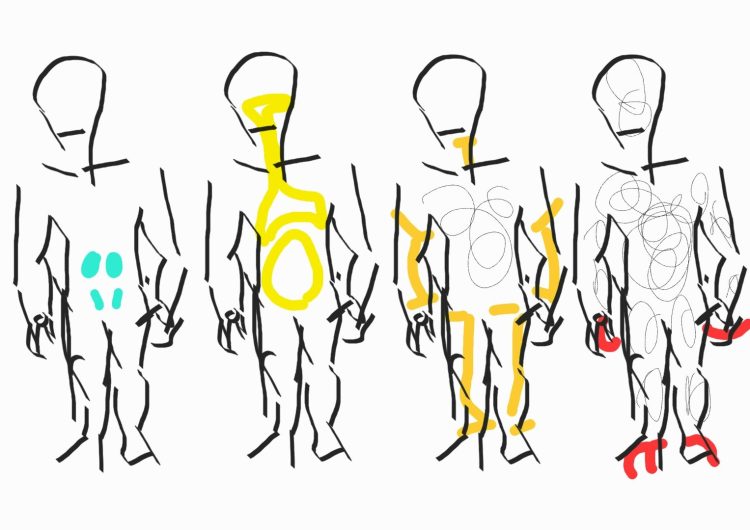
To jump to the worst extreme you could have someone who’s posture is very badly aligned and has pretty much no ability to ‘feel’ their body positioning or movement. This is represented by the picture with red on the far right. As far as I can tell the easiest way to get them aware of how their body is going is through their hands and feet.
Quite often if the core and limbs are locked up, you can still feel whats happening with hands and feet. If you were going to be helping multiple people in this condition, mirrors pictures, videos and movies of them can start to help.
I also think getting pressure plates for people to stand and sit on would be very handy. It would give them another chance to ‘see’ where restriction was creating extra pressure. This in combinations with strategies classed at reducing cortisol levels seems to be the best starting point.
The state in the picture with orange is how I related to my core for most of my existance. People talk about things like your glute muscles being turned of. To simplify this state the core is mostly restricted and a lot of information coming from there is turned off. I think in a lot of these cases people use there limbs more to determine body positioning.
I found using a foam roller in a balanced form (i.e. on equally for abs and back) to start separating restricted muscles area and find where I had stupid body position cues the most helpful.
The picture with yellow is designed to represent the stage where people have core awareness but it hasn’t been full tuned. I started to get some ideas down about this in the ‘Teardrop’ bits of writing.
In the picture with green the four points indicated are two upper ab areas and two lower back areas. This is draw to represent people that have unrestricted cores and can more them well.
The four green area represent where I think the most effective areas are for feeling the positioning of your core and adjusting it. These are the two upper abs and the base of two lines of muscle either side of your spine that connect into your hips.
As a simplification the front of the abs can be cued from two area on an egg shaped ring. If one side of your abs cannot return to a fully buoyant position, assuming your core is not restricted, imagine that that side of your abs has rounded off. By imaging you are pushing the top of the rounded off area back into the teardrop shape you can cue it back into position.
Because the human core is designed for forward movement it’s axis is the spin and quite close to the back. If one side of the back muscles groups isn’t holding the back straight, I think one of the best images is to imagine is of several long inflatable cells. To correct this I think imagining the muscles on the concave side filling up and supporting each other to allow the spine to elongate is a great cue.
To continue looking at the reasons you would learn about a less or restriction free core will follow. As well as a more comprehensive range of cues working away from the core.
 Dezhanite Drafts